
 Hyundai Santa Fe: Brake Line. Repair procedures
Removal
| 1. |
Disconnect the brake fiuid level switch connector, and remove
the reservoir cap.
|
| 2. |
Remove the brake fluid from the master cylinder reservior with
a syringe.
|

| 3. |
Remove the wheel & tire.
|
| 4. |
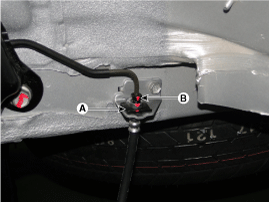
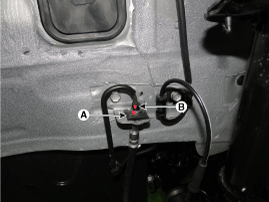
Disconnect the brake tube by loosening the tube flare nut (B).
Front
Rear
|
| 5. |
Remove the brake hose clip (A).
|
| 6. |
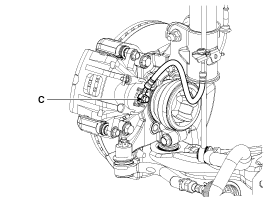
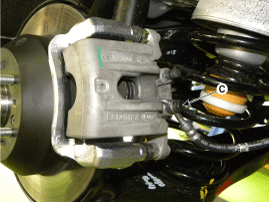
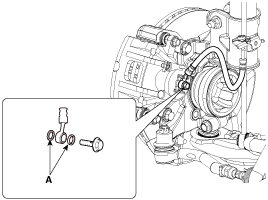
Disconnect the brake hose from the brake caliper by loosening
the bolt (A).
Front
Rear
|
Inspection
| 1. |
Check the brake tubes for cracks, crimps and corrosion.
|
| 2. |
Check the brake hoses for cracks, damage and fluid leakage.
|
| 3. |
Check the brake tube flare nuts for damage and fluid leakage.
|
| 4. |
Check brake hose mounting bracket for crack or deformation.
|
Installation
| 1. |
Installation is the reverse of removal.
|
| 2. |
After installation, bleed the
|
| 3. |
Check the spilled brake oil.
|
 Brake Line. Components and Components Location
Components ...
 Brake Pedal. Components and Components Location
Components 1. Cowl bracket 2. Brake pedal member assembly 3. Stop lamp switch 4. Return spring 5. Brake pedal stopper 6. Brake pedal arm 7. Brake pedal pad ...
See also:
Components and Components Location
Components 1. Steering column shaft 2. ECU 3. Motor 4. Steering gear box ...
Front Wheel Components and Components Location
Components Location 1.Under cover 2. Transaxle Assembly 3. Transfer assembly 4. Propeller shaft 5. Coupling assembly ...
Description and Operation
OBD-II review 1. Overview The California Air Resources Board (CARB) began regulation of On Board Diagnostics (OBD) for vehicles sold in California beginning with the 1988 model year. The first phase, OBD-I, ...
