
 Hyundai Santa Fe: CVVT Oil Control Valve (OCV). Description and Operation
Description
Continuous Variable Valve Timing (CVVT) system advances or retards the
valve timing of the intake and exhaust valve in accordance with the ECM control
signal which is calculated by the engine speed and load.
By controlling CVVT, the valve over-lap or under-lap occurs, which makes
better fuel economy and reduces exhaust gases (NOx, HC) and improves engine
performance through reduction of pumping loss, internal EGR effect, improvement
of combustion stability, improvement of volumetric efficiency, and increase
of expansion work.
This system consist of
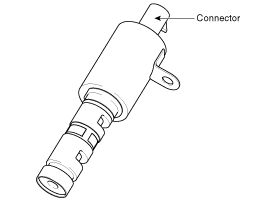
-the CVVT Oil Control Valve (OCV) which supplies the engine oil to the
cam phaser or cuts the engine oil from the cam phaser in accordance with the
ECM PWM (Pulse With Modulation) control signal,
- the CVVT Oil Temperature Sensor (OTS) which measures the engine oil
temperature,
-and the Cam Phaser which varies the cam phase by using the hydraulic
force of the engine oil.
The engine oil getting out of the CVVT oil control valve varies the cam
phase in the direction (Intake Advance/Exhaust Retard) or opposite direction
(Intake Retard/Exhaust Advance) of the engine rotation by rotating the rotor
connected with the camshaft inside the cam phaser.
 Purge Control Solenoid Valve (PCSV). Repair procedures
Inspection 1. Turn the ignition switch OFF. 2. Disconnect the PCSV connector. 3. Measure resistance between the PCSV terminals 1 and 2. 4. Check that the resistance is within the specification. Specification: ...
 CVVT Oil Control Valve (OCV). Specifications
Specification Item Specification Coil Resistance (Ω) 6.9 ~ 7.9 [20°C(68°F)] ...
See also:
Headlamp bulb
WARNING - Halogen bulbs Halogen bulbs contain pressurized gas that will produce flying pieces of glass if broken. Always handle them carefully, and avoid scratches and abrasions. If the bulbs are lit, ...
Owner maintenance
The following lists are vehicle checks and inspections that should be performed by the owner or an authorized HYUNDAI dealer at the frequencies indicated to help ensure safe, dependable operation of your ...
Rear Seat Latch. Repair procedures
Replacement [Second row seat assembly] • Put on gloves to protect your hands. • When prying with a flat-tip screwdriver, wrap it with protective tape, and apply protective tape around the related parts, ...
