
 Hyundai Santa Fe: Description and Operation
Description
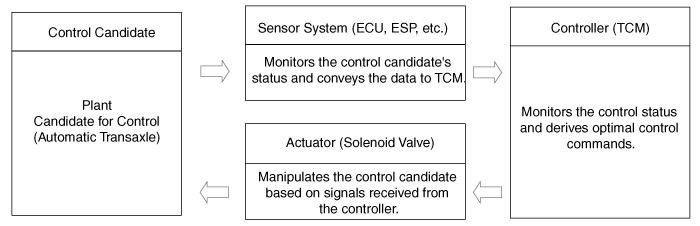
Automatic transaxle system relies on various measurement data to determine
the current control status and extrapolate the necessary compensation values.
These values are used to control the actuators and achieve the desired control
output. If a problem with the drivetrain, including the transaxle, has been
identified, perform self-diagnosis and basic transaxle inspection (oil and fluid
inspection) and then check the control system's components using the diagnosis
tool.
Control System Composition
 Repair procedures
Adjustment Transaxle Control Module(TCM) Learning When shift shock is occurred or parts related with the transaxle are replaced, TCM learning should be performed. In the following case, TCM learning is ...
 Components and Components Location
Component Location 1. Automatic transaxle 2. Inhibitor switch 3. Transaxle Control Module (TCM) 4. Valve body cover 5. Solenoid valve connect 6. Oil temperature sensor 7. Valve body assembly 8. Line Pressure ...
See also:
Tail Gate Assembly. Components and Components Location
Component Location 1. Tail gate assembly ...
Side repeater lamp replacement
If the lamp bulb does not operate, have the vehicle checked by an authorized HYUNDAI dealer. ...
Front Disc Brake. Repair procedures
Removal 1. Remove the front wheel & tire. Tightening torque: 88.3 ~107.9 N.m (9.0 ~11.0 kgf.m, 65.1 ~79.6 lb-ft) 2. Loosen the hose eyebolt (C) and caliper mounting bolts (B), then remove the front ...
