
 Hyundai Santa Fe: Main Crash Pad Assembly. Repair procedures
Replacement
|

|
| 1. |
Remove the front pillar trim.
|
| 2. |
Remove the cowl side trim.
|
| 3. |
Remove the instrument cluster.
|
| 4. |
Remove the crash pad center lower panel.
|
| 5. |
Remove the steering column shroud lower panel.
|
| 6. |
Remove the steering wheel.
|
| 7. |
Remove the multifunction switch assembly.
|
| 8. |
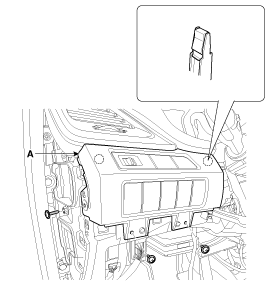
After loosening the mounting screws, then remove the crash pad
side switch (A).
|
| 9. |
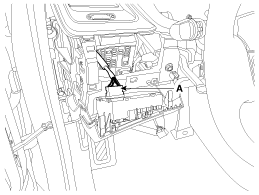
Disconnect the crash pad side switch connector (A).
|
| 10. |
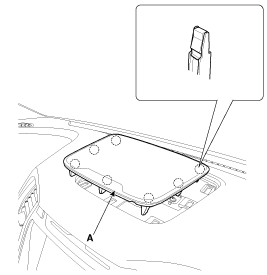
Using a screwdriver or remover, remove the center speaker grill
(A).
|
| 11. |
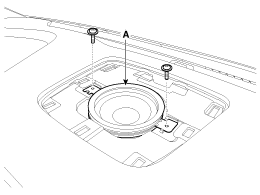
After loosening the mounting screws, then remove the center speaker
assembly (A).
|
| 12. |
Disconnect the center speaker connector (A).
|
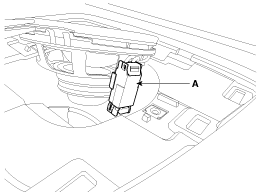
| 13. |
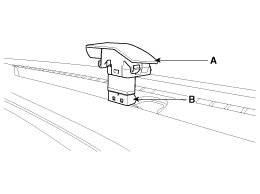
Using a screwdriver or remover, remove the photo sensor (A).
|
| 14. |
Disconnect the photo sensor connector (B).
|
| 15. |
Loosen the mounting nuts.
|
| 16. |
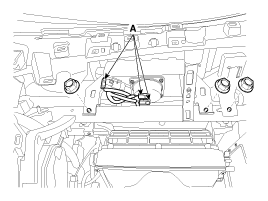
Disconnect the passenger's airbag connectors (A).
|
| 17. |
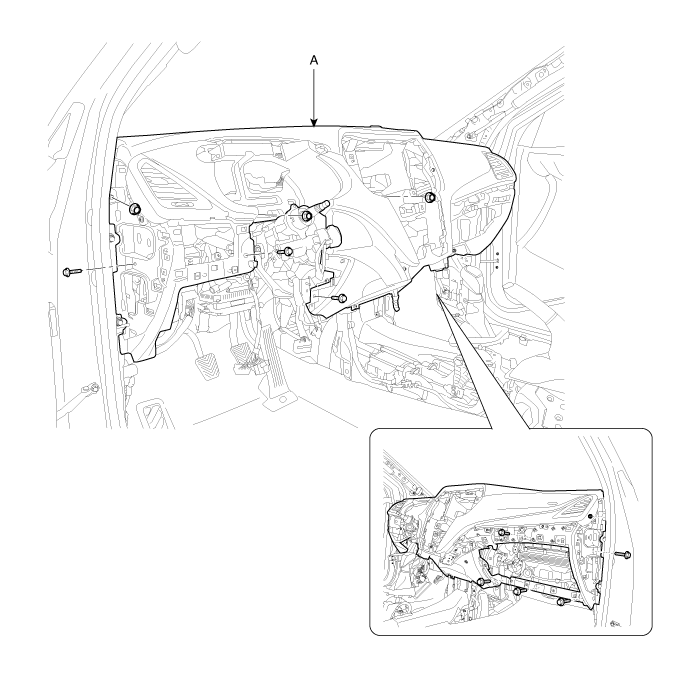
After loosening the mounting bolts and nuts, then remove the main
crash pad assembly (A).
|
| 18. |
Install in the reverse order of removal.
|
 Main Crash Pad Assembly. Components and Components Location
Component Location 1. Main crash pad assembly ...
 Cowl Cross Bar Assembly. Components and Components Location
Component Location 1. Cowl cross bar assembly ...
See also:
Weight of the trailer tongue
The tongue load of any trailer is an important weight to measure because it affects the total gross vehicle weight (GVW) of your vehicle. This weight includes the curb weight of the vehicle, any cargo ...
When Active ECO is activated
The engine noise may get louder. The vehicle speed may slightly be reduced. The air conditioner performance may be affected. ...
A/V Mode
This mode displays the state of the A/V system. ...
