
 Hyundai Santa Fe: Repair procedures
On-vehicle Inspection
| Inspect ignition coil assembly and Perform spark test |
| 1. |
Check for DTCs.
|

| 2. |
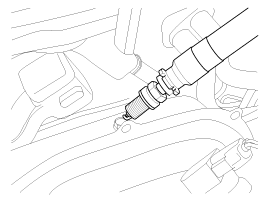
Check if sparks occur.
|
| 3. |
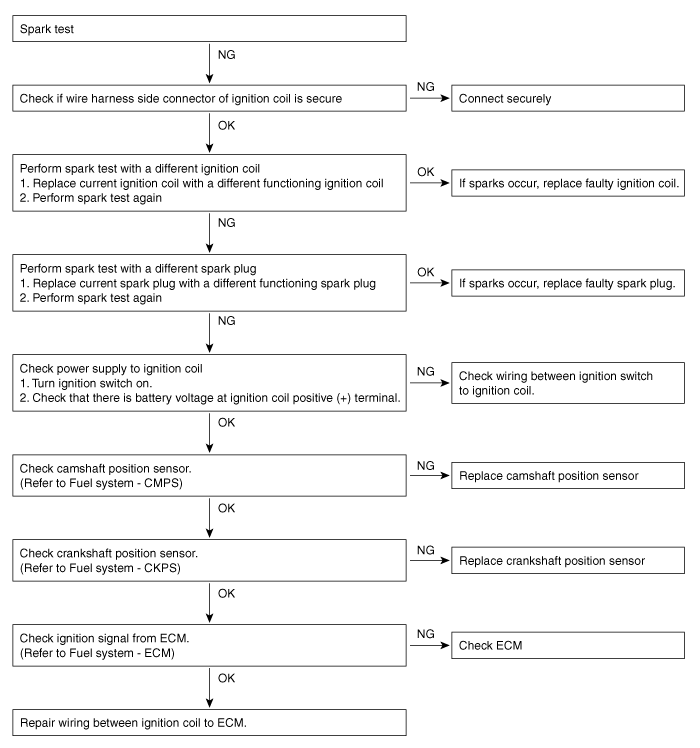
If sparks do not occur, perform the following test.
|
| 4. |
Using a spark plug wrench, install spark plugs.
|
| 5. |
Install the ignition coils.
|
 Description and Operation
Description Ignition timing is controlled by the electronic control ignition timing system. The standard reference ignition timing data for the engine operating conditions are pre-pro grammed in the memory ...
 Ignition Coil. Description and Operation
Description An ignition coil is an induction coil in an engine's ignition system which transforms the battery's low voltage to the high voltage needed to create an electric spark in the spark plugs ...
See also:
How to use this manual
We want to help you get the greatest possible driving experience from your vehicle. Your Owner’s Manual can assist you in many ways. We strongly recommend that you read the entire manual. In order to ...
Air bag - supplemental restraint system
(1) Driver’s front air bag (2) Passenger’s front air bag (3) Side impact air bag (4) Curtain air bag (5) Driver’s knee air bag WARNING Even in vehicles with air bags, you and your passengers must ...
Delivery Pipe. Repair procedures
Removal In case of removing the high pressure fuel pump, high pressure fuel pipe, delivery pipe, and injector, there may be injury caused by leakage of the high pressure fuel. So don’t do any repair ...
